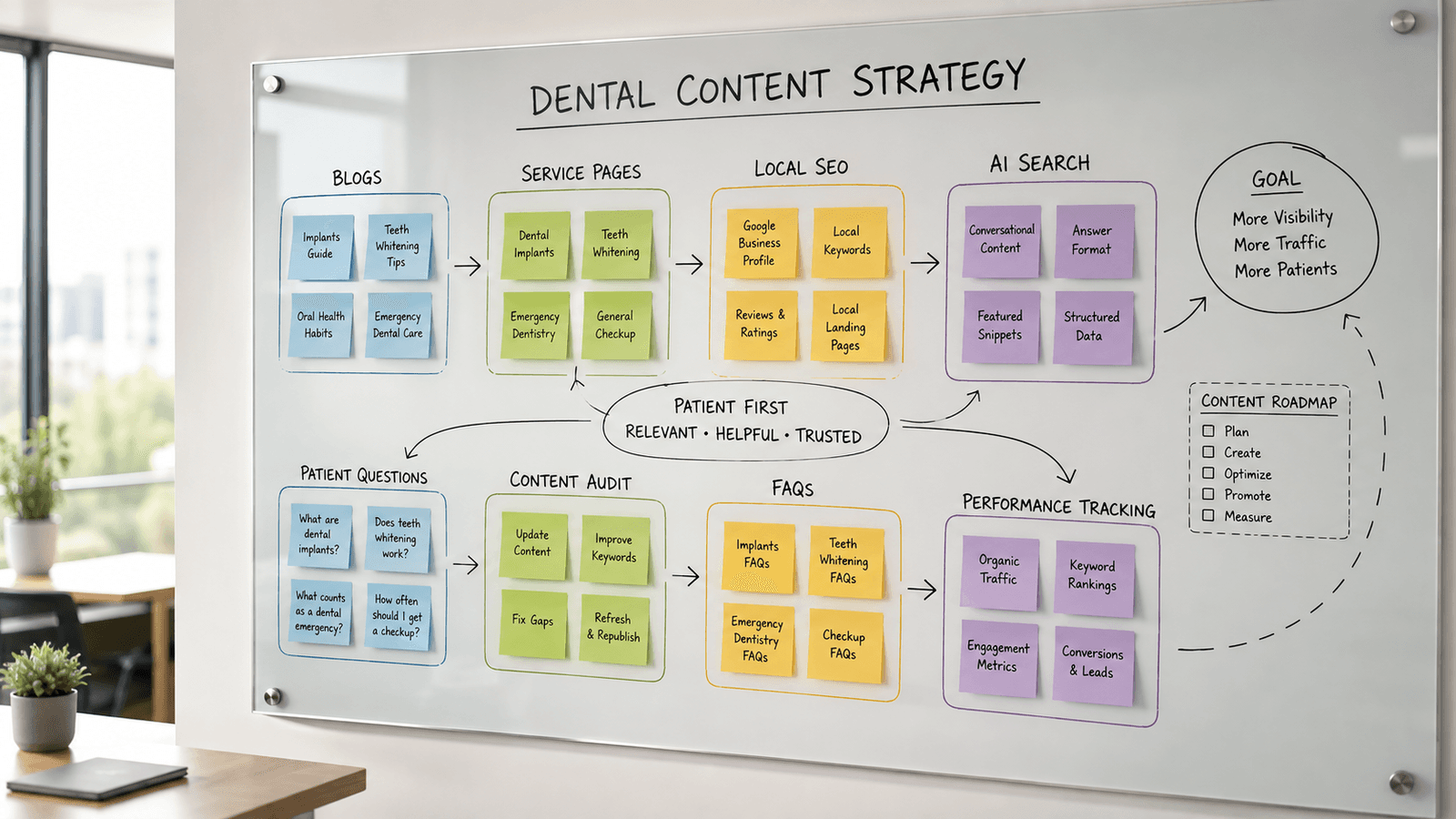
Search behavior keeps changing, and your dental marketing needs to keep up.
Patients now expect quick answers, helpful information, and an easy experience when researching dental care online.
At the same time, Google continues changing how it evaluates and displays content. Therefore, your content marketing and strategy should evolve with those changes.
You do not need to replace everything on your website. Instead, you can improve existing content while creating new pages around current patient needs.
A focused approach can help you protect rankings, attract qualified visitors, and create more opportunities for new appointments.
Review Your Existing Dental Content
Before creating more content, review what you already have. Start with your service pages, location pages, blogs, and frequently asked questions.
Look for pages with declining traffic, outdated information, weak engagement, or lower search rankings.
You should also review pages receiving impressions but few clicks. Those pages may only need better titles, descriptions, or stronger information.
Google Search Console can help you identify which pages and search terms are changing.
Meanwhile, Google Analytics can show which pages attract visitors and encourage useful actions.
This process helps you focus your efforts instead of updating every page without a clear reason.
Match Your Content With Current Search Intent
Keywords remain important, but search intent should guide your content decisions.
Patient searches can change over time. For example, someone researching dental implants may want costs, recovery information, eligibility, and treatment timelines.
Your older page may cover the treatment but miss those newer patient questions. Therefore, search your target topics again before updating important pages.
Review what patients currently expect to find.
Then, strengthen your page with useful information that directly addresses those expectations.
Your content marketing and strategy becomes stronger when every page solves a clear patient need.
Prepare Your Content for AI Search
Search results now include more AI generated summaries and conversational search experiences. However, helpful content still matters.
Your dental content should provide clear answers that search engines and patients can easily understand.
Use descriptive headings, short paragraphs, useful FAQs, and straightforward explanations.
You should also include genuine practice knowledge when appropriate. For example, explain what patients commonly ask before a procedure or consultation. This creates information that feels useful rather than generic.
Most importantly, avoid adding content only to make a page longer. Every section should help your reader understand the topic or make a better decision.
Strengthen Your Local Search Visibility
Many dental searches have strong local intent. Patients often want a dentist near their home, workplace, or community.
Therefore, your content should naturally support your local visibility.
You can strengthen relevant pages with accurate location details, treatment information, and patient focused questions.
Your local SEO for dentists strategy should also connect your website with your local search presence.
This helps Google understand where your practice operates and which services you provide.
However, avoid adding location names repeatedly. Local information should feel natural and helpful to your reader.
Improve Website Experience Alongside Your Content
Great information can still underperform when your website is difficult to use.
Your visitors should quickly understand your services and know where to go next.
Review your menus, page structure, mobile experience, forms, and appointment buttons.
Your content should also be easy to scan on smaller screens.
A professional dental web design strategy can support your content by making important information easier to find.
Clear design also helps guide visitors toward service pages and appointment opportunities. Therefore, content and website usability should work together.
Refresh Content Instead of Starting Over
You do not always need another blog post. Sometimes, updating an existing page is the better choice.
You can refresh outdated statistics, treatment details, FAQs, internal links, and calls to action.
You can also improve headings and remove sections that no longer help readers. However, avoid changing pages that already perform well without a clear reason.
Review your data first. Then, decide whether a page needs a small update, major rewrite, or no changes.
This keeps your content marketing and strategy focused on meaningful improvements.
Measure What Happens After Each Update
Content updates should support measurable business goals.
Track organic clicks, impressions, rankings, website visitors, inquiries, and appointment actions.
You should also compare performance before and after important updates. Some improvements may take time to appear.
Therefore, continue monitoring results instead of judging an update after only a few days.
Over time, these insights can help you understand which topics attract the right patients. They can also guide your future content decisions.
Schedule a Consultation Today
Your dental content should grow with changing search habits. You do not need to chase every new SEO trend.
Instead, you need a clear strategy that keeps your website useful, accurate, and visible.
Dental SEO Pros can help you improve your content and identify opportunities for stronger search performance.
Why Choose Dental SEO Pros
- SEO and content strategies created for dental practices.
- Clear recommendations based on your practice goals and search performance.
- A focus on attracting qualified patients, not just increasing website traffic.
Schedule an appointment today to discuss your dental SEO and content strategy.